
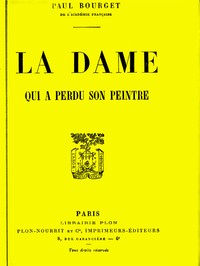
La dame qui a perdu son peintre by Paul Bourget
Paul Bourget, a master of psychological fiction, gives us a story that feels both timeless and incredibly intimate. It's less about grand events and more about the quiet earthquake that happens inside a person.
The Story
The novel centers on a woman defined entirely by her role as the muse and wife of a celebrated painter. Her beauty was his favorite subject, her salon the center of his artistic world. When he dies, she isn't just widowed; she is utterly lost. The invitations stop. The social circle dissolves. The reflection she recognized—the one he painted and adored—no longer exists in the eyes of the world. The plot follows her fragile attempts to navigate this new, empty landscape and to find a self that belongs to her alone.
Why You Should Read It
This book got under my skin. Bourget doesn't judge his heroine; he simply shows her reality with heartbreaking clarity. It made me think about the invisible structures in our own lives—relationships, jobs, roles—that shape who we are. What's left when they're stripped away? The writing is precise and vivid, pulling you into the quiet rooms and loud silences of her grief. It's a slow burn, but the emotional payoff is immense.
Final Verdict
Perfect for readers who love character-driven stories that explore the human psyche. If you enjoy novels about interior life, the complexities of marriage, or the process of rebuilding after loss, this is a hidden gem. It's not a light read, but it's a profoundly rewarding one. Think of it as a deep, thoughtful conversation with a fascinating character from another era, whose struggles feel entirely modern.
This publication is available for unrestricted use. You are welcome to share this with anyone.
Linda Smith
1 year agoI have to admit, the depth of research presented here is truly commendable. Worth every second.
Mason Anderson
7 months agoJust what I was looking for.
Nancy Nguyen
10 months agoLoved it.
Donald White
1 year agoAs someone who reads a lot, it challenges the reader's perspective in an intellectual way. Highly recommended.



Oliver Lewis
1 year agoI came across this while browsing and it challenges the reader's perspective in an intellectual way. I will read more from this author.