
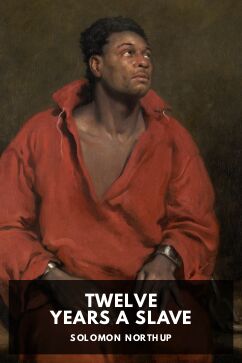
Twelve Years a Slave - Solomon Northup
Solomon Northup's Twelve Years a Slave is a book that grabs you by the collar and doesn't let go. Published in 1853, it's not a historical novel; it's a memoir. Northup was a free Black man, a skilled carpenter and violinist living in Saratoga Springs, New York, with his wife and children.
The Story
In 1841, two men offered him a short-term, high-paying job as a musician in Washington, D.C. It was a trap. After a celebratory dinner, he woke up in a dark cell, chained to the floor. He had been drugged and sold. His captors beat him savagely when he declared his freedom, teaching him his first brutal lesson: his old life was over. Renamed 'Platt,' he was shipped to Louisiana and sold at auction. For the next twelve years, he endured backbreaking labor on cotton and sugar cane plantations under masters ranging from the unpredictably cruel Edwin Epps to the more humane William Ford. Northup's constant, quiet battle was to survive the physical torture and psychological degradation while secretly working to get a message to the North to prove his identity and reclaim his freedom.
Why You Should Read It
This book is powerful because of its clear, direct voice. Northup doesn't scream from the page; he observes and reports with devastating precision. You see the mundane horrors of the system: the arbitrary whippings, the heartbreaking separation of families at auction, the calculated destruction of a person's spirit. What hit me hardest was his dual existence. He was an educated man forced to play the part of an ignorant slave, biting his tongue to stay alive. His friendship with Patsey, a young enslaved woman who suffers unimaginable abuse under Epps, is one of the most tragic and human elements of the story. It shows the solidarity and shared pain that existed even in the depths of that system.
Final Verdict
This is essential reading for anyone interested in raw, unfiltered American history. It’s for readers who loved the emotional pull of a novel like The Underground Railroad but want the sobering weight of a true story. It’s not an easy read—some passages are graphically violent and emotionally draining—but it’s an important one. Northup’s account removes the comfortable distance of history and forces you to sit with the reality of what happened. You’ll finish it with a deeper, more painful, and more necessary understanding of a foundational American injustice.
No rights are reserved for this publication. It is now common property for all to enjoy.
Thomas Williams
2 months agoGood quality content.
Barbara Johnson
1 year agoPerfect.
Melissa Martin
1 year agoWow.
Betty Young
1 year agoI have to admit, the narrative structure is incredibly compelling. Worth every second.







Betty Ramirez
1 year agoI didn't expect much, but the narrative structure is incredibly compelling. Worth every second.